.webp)


.webp)


.webp)


.webp)


Welcome to ZUTTO
Free shipping for newsletter subscribers (some areas excluded)
- トップページ/
- ZUTTO Journal/
- 選び方・使い方/
- Cleaning Tools Th...
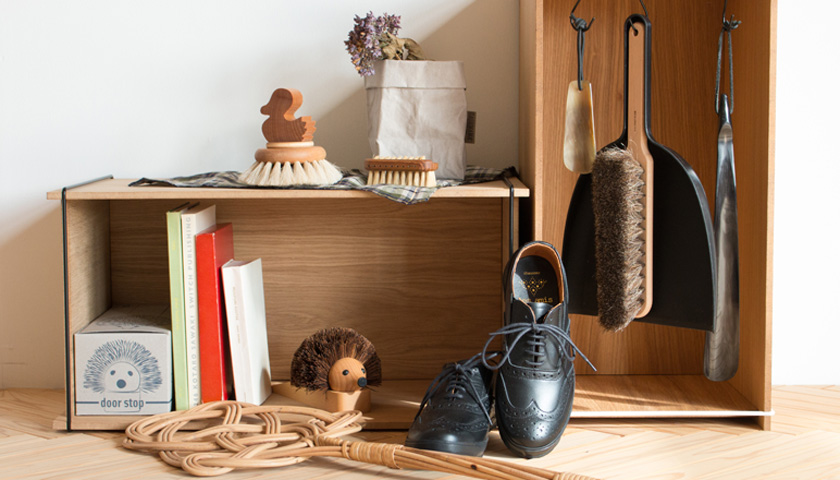
Cleaning tools that tidy up your life and make you want to keep them close
As the year draws to a close, the season for washing away a year's worth of grime has arrived. At year's end, when we want to settle both our surroundings and our minds before greeting the new year, it's also a good time to review and maintain the everyday items we use daily. For those considering replacing cleaning tools that have quietly grown worn from long service, or for those who don't yet have a full set of tools, we'd like to introduce items you'll want to keep using for years to come.
When your cleaning tools are ones you find charming, they shift from being "things you throw away once dirty" to "things you feel attached to," which in turn helps cut down on waste. We hope this guide helps with your year-end deep cleaning as well as your everyday cleaning routine in the new year.
Also, as part of our support for year-end deep cleaning, customers who purchase cleaning items along with other products ※while supplies last※ can receive an iris hantverk duck-shaped brush as a gift ("This offer has ended"). Details are provided at the end of this article.
The History of Cleaning Tools

The susuharai (soot-sweeping) ritual performed at shrines and temples at year's end, along with the cleaning of homes, are both practices that not only clear away dirt but also settle the mind. This time, we'd like to start by introducing the history of cleaning itself.
Cleaning began during the Heian period as a Shinto ritual practiced by nobles and the imperial court, in which sweeping with a hōki (broom) carried the meaning of inviting in good fortune and sweeping away misfortune. By the Edo period, as commoners' lifestyles shifted from bare floors to tatami mats, and as cotton materials spread alongside hemp, and as Japan's hot, humid climate meant that wearing footwear indoors brought in dirt and contributed to outbreaks of disease, the custom of removing shoes at home and of cleaning the house seems to have taken root and spread.
The Japanese are often thought of as being fond of cleanliness, but this history of cleaning—rooted in Shinto beliefs and shaped by the climate—has become a habit we practice today. Learning even a little about it makes us want to carry out our year-end cleaning with care, hoping for a healthier, more comfortable year ahead, both in the coming year and in daily life.
The Basic Tools
Whether you live alone in a small room or in a standalone house, the order for clearing away dust is the same everywhere: work from top to bottom. Since the sequence never changes no matter where you are, let's introduce the basic tools needed. You'll need three things: a hōki (broom), a duster (hataki), and a zōkin (cleaning cloth).
1. Hōki (Broom)

Many households likely find a vacuum cleaner sufficient, but a hōki is a handy tool that can instantly clean up spilled food or scattered debris without needing a vacuum—and it lets you sweep quietly without worrying about disturbing neighbors or family members early in the morning or late at night. If used alongside a vacuum, we recommend a compact or mini broom for indoor use, and a long-handled one for outdoor areas like the garden or entryway, which spares strain on your back. Each broom also has materials suited to particular purposes. For example, sturdy hōki-gusa (broom grass) bristles are effective at drawing dirt out of tatami mats and carpets, while shuro (palm fiber), which brings out shine as you sweep, and horsehair, packed with fine bristles, are ideal for gathering dust and debris from flooring. Each takes advantage of the natural properties of its material, making brooms a genuinely fascinating tool.
Among these, the brooms we can introduce at ZUTTO are made of horsehair and shuro.
2. Duster (Hataki)
.jpg)
A duster lets you knock dust from high places down onto the floor. Whether made of feathers, hair, cloth, or polyester, and used on ceilings or light fixture covers, these fluffy tools are the hataki that has long existed in Japan under the duster category. Using one before sweeping clears dirt from high places first, leaving the room's air feeling fresher after cleaning. (Dust in spots we can't easily see is hard to notice, but cleaning it really does make a difference.)
Dusters made of natural materials also resist static electricity and can reach into fine details, making them useful for clearing dust from behind the TV or cabinets, or from houseplants. Among the different types, the soft ostrich feather duster is gentle enough not to scratch surfaces, making it reassuring to use around expensive or precious items. Long-handled versions are handy for clearing dust off ceilings, walls, or light fixture covers, while short handy types work well around computers and other electronics, or on a desk. Choosing one to suit the items in your room and keeping it somewhere visible makes it easy to reach for naturally, helping the room stay tidy as a matter of course.
3. Rags
Old clothing or towels work perfectly fine. Wiping with a damp rag at the end of cleaning leaves things looking crisp and clean, so it's recommended as a finishing touch.
Cleaning Tools Introduced by Location
●Entryway・・・The entryway floor is a spot that gets dirty not only from soil on the bottoms of shoes but also from dust and dirt carried in by the wind whenever the door opens and closes. Keeping it clean naturally makes everyone's "I'm off!" feel more pleasant, and gives a sense of relief the moment you say "I'm home." Dustpan Set, Stand Brush & Dustpan Set have a pleasant look and stylish presence that work well left out in the entryway, combining practicality with interior appeal. Leaning them somewhere visible makes it easier to encourage help around the house—"Give it a quick sweep before you head out." Just a few minutes of cleaning keeps the home comfortable for the next person to use it.

●Kitchen・・・The area in front of the microwave or toaster door, and the countertop, are spots where small spills tend to happen. A small broom that can quickly sweep up bread crumbs, coffee beans, tea leaves, and cooking flour also makes it easier to gather dirt that collects at the bottom of cabinets and drawers.Short Brush & Dustpan Set, Table Brush & Dustpan Set, Gap Cleaning Set are dustpan and broom (brush) sets. Choose a handle length that suits the space you're cleaning and the situation you'll be using it in.


●Living Room・・・Rooms where people gather tend to be filled with furniture and large appliances, and dirt easily builds up, so it's handy to have a brush for removing grime from tight spaces. One of the great things about a broom is that it can reach both wide areas and tiny corners—it can quickly wipe over spots even a vacuum struggles to reach, such as under the refrigerator, gaps between furniture and appliances and the wall, tops of shelves, curtain rails, and lampshades. In particular, the backs of electrical appliances tend to generate static electricity, causing dust to gather and darken, so it's reassuring to keep them clean.Shuro Gentle Broom, Five-Ball, Short Yakisugi Handle, Shuro Gentle Broom, Three-Ball, Gap Cleaning Set are cleaning tools crafted with an artisan's care in Wakayama, Japan. They are old-fashioned brooms that make you feel that good tools remain, no matter how times change.

●Home Appliances and Furniture・・・For places with lots of small items—televisions, lighting stands, audio equipment, the gaps around air conditioners, the tops of bookshelves—gently stroke away dust with a fluffy duster's bristles. This also clears away eraser bits on the desk and fine dust around the keyboard and computer.Ostrich Feather Duster, Hataki Duster, Goat Hair, 34cm, Hataki Duster, Horse Hair, 60cm, Table Brush, Computer Brush come in various shapes—beyond just their intended use, it's a good idea to choose one whose look suits your room's interior. It's best to leave it out somewhere within easy reach so you naturally pick it up whenever you notice dust.

●Bathroom (Toilet)・・・Because toilets get dirty, people often buy disposable plastic toilet brushes, which aren't exactly something you want left out in view—but with a little care in choosing, you can create a stylish toilet space that's also nice for guests.Toilet Brush, Short Brush & Dustpan Set are cleaning tools that instantly add style when placed in a corner of the bathroom, eliminating any need to decorate the space with something else entirely.

●Bedroom (Fabrics)・・・A carpet beater is great for airing out cushions, futons, and mats outdoors and knocking off surface pollen and the like, making it useful for removing allergy-causing substances too. There's something nostalgic about the Carpet Beater, and its natural look is fine even leaning against a windowsill. Futon dryers are good too, but sun-drying also helps prevent mites, so this is a supporting cleaning tool worth having on hand as well.

How to Enjoy Your Cleaning Tools for Many Years
◉Broom・・・It's best to store it hanging up so the bristles don't take on a bent shape after use. Direct sunlight and UV rays speed up deterioration, so please keep it out of such light. If you notice dust or hair caught in the bristle tips, remove it by pinching it out with a scrub brush or your fingers.
◉Duster (Hataki)・・・For dirt caught in the bristle tips, use another brush or comb suited to the bristle material to remove debris that's worked its way inside. For feather dusters, it's best to wipe from the base to the tips of the feathers with a cloth dampened with water and wrung out firmly.
◉Toilet Brush・・・Toilet brushes often can't be properly drained after cleaning, and many people may feel uneasy about this incomplete way of putting them away. Toilet brushes are prone to bacteria and mold growth. Once every one to two weeks, on a sunny day, take out the brush along with its holder and let them dry in the sun, so you can keep using them cleanly and comfortably.

Tidying up and cleaning can also bring a sense of ease to your mind. Just like brushing your teeth after a meal, if you can clean before dirt builds up day by day, you won't need to spend a whole holiday cleaning, and living with a calm mind might even bring some good things your way. (It might be especially nice to keep your entryway clean.) Taking the end of the year as an opportunity, if you enjoy your daily cleaning with tools you truly care about, it becomes an attachment to the object itself, and hopefully you'll gain one more favorite item to treasure.
*Limited Quantity* About the Duck Brush Present Campaign: "This has ended"

With only a little of 2022 left, whether you're finally getting up the motivation to tackle your year-end cleaning or you're someone who already loves cleaning, as a way of supporting your year-end cleaning efforts, we're offering a lovely duck brush as a gift, while supplies last, to customers who spend 12,000 yen or more, including eligible cleaning tools, from the long-established Swedish brand iris hantverk. Boasting over 100 years of history and tradition, this all-handmade brush from the long-established maker is cute enough to display, yet its natural horsehair bristles are gentle on the skin, making it perfect for use as a body brush. Treat your body, covered in soot from year-end cleaning, to a nice cleanse in the bath. At about 12 cm, it's generously sized to hold plenty of soap suds, and its adorable appearance makes it a comforting little companion in your bathroom. This gift is available to customers who spend 12,000 yen or more, including a product whose name is marked "【Brush Gift Eligible】".
■Limited Quantity Gift Item: Iris Hantverk Duck Brush (Size: approx. 12cm, Material: beech, horsehair)
■Gift Eligibility: Customers who spend 12,000 yen or more, including a product whose name is marked "【Brush Gift Eligible】"
*This offer will end once the limited quantity has been reached.
*If you purchase multiple eligible items, your order history may show a gift item for each product quantity, but please note in advance that only one gift will be included per order.
▷ For more about iris hantverk, click here

▽For the Housekeeping category, click here

GUIDE »
CATEGORIES »
- + Gifts by recipient
- + Gifts by scene
- + Clothing
- + Bags / Backpacks
- + Wallets / Card cases
- + Jewelry
- + Shoes
- + Rainy day outfits
- + Kitchen
- + Home
- + Babies / Kids
- + Japanese products
Earn Miles


Payment & Security