.webp)


.webp)


.webp)


.webp)


- トップページ/
- ZUTTO Journal/
- 選び方・使い方/
- How to Display Fl...

How to Keep Flowers Beautiful Longer: Choosing and Using a Flower Vase
A colorful little table bouquet placed casually at the entrance of a flower shop. Small bouquets made with seasonal flowers and greenery have a way of catching the eye, despite their modest size. A large bouquet bought for someone special is wonderful, of course, but buying flowers for yourself, to display in your own room, is a lovely thing too.
This time, we're focusing on the flower vase. Simply choosing a vase that suits the flowers can bring the whole space into focus and make you want to enjoy them even longer. Let's think about how to use vases of various materials, sizes, and designs to display flowers beautifully—and keep them looking good for as long as possible.
Tips for Choosing a Vase

Even people who don't normally use a flower vase can find themselves at a loss when they occasionally receive a bouquet and aren't sure how to arrange it. You don't need to gather a whole collection of vases—if you have one basic vase, you can adapt it to many situations. Here are three key points to keep in mind when you're not sure which one to choose.
・If you're unsure about color, choose white or clear
・Decide whether you'll mostly display a single stem or a bunch (bouquet)
・Consider a height and shape that will match your room
If you keep in mind that, as a piece of interior décor, the color and shape should suit your room, and that, as a tool for arranging flowers, the size should properly match the size of the flowers, you can display flowers without fail. The term "flower vase" covers a wide range of materials, which can make it hard to decide. Curiously, even vases of the same height and shape can create an entirely different feel in a space simply because the material is different.
Choosing by Material
Let's start by choosing based on material.
Glass: Versatile Enough for Any Flower


Given that the word "vase" so often brings glass to mind, it's no surprise that glass remains the classic choice for a flower vase. Its cool, refreshing appearance and the way light passes through it give a space a light, airy feel. Because a glass vase is transparent all the way through, you can see even the stems, so you get to enjoy the look of the whole plant, not just the flowers—one of its distinctive charms.
Suzu (Tin): A Wa-Modern Feel That Helps Flowers Last Longer


Thanks to its color and texture, suzu (tin) tableware plays a role in giving a space a more polished, composed feel. And yet it never asserts itself too strongly, so it looks equally at home in Japanese or Western settings—whether at the entryway or in the living room. What's more, tin is known for its excellent antibacterial properties, which is said to help cut flowers last longer. Set against tin, the colors of flowers and the rich green of foliage stand out beautifully.
Bamboo: Blends Naturally into Any Space


Another material we'd like to highlight is bamboo, used for flower vases. Glass and tin, with their crisp, cool impression, can sometimes end up feeling a little cold. Bamboo, on the other hand, is a plant just like the flowers themselves, so it blends naturally with almost any kind of flower or greenery. The wa-modern (Japanese-modern) look it creates is something only a material like bamboo can achieve. What's more, bamboo has antibacterial properties, which makes it a pleasingly hygienic choice to use.
Choosing by Design
For Striking Large Blooms... A Ceramic Vase That Balances Height and Stability
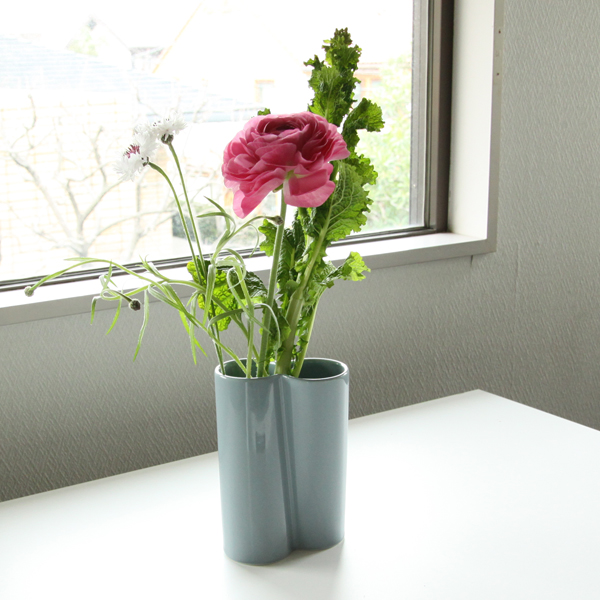
You've been given a bouquet with big, showy flowers. Now what?
For flowers with large, voluminous petals—gerberas, roses, hydrangeas, and the like—we recommend a ceramic vase that balances height with a stable base. Since you can't have too many large vases around, it's best to choose a basic one made of ceramic or glass, in white, beige, or gray tones (or clear, if glass), so that it can be used with many different kinds of flowers.
For a Single Stem... A Slim Vase That's Easy to Display Even in Tight Spaces

A single flower placed in a small space—the entryway of an apartment, or a little corner of a Japanese-style room—has a way of putting the mind at ease. A slim single-stem vase is easy to display in almost any space and easy to clean, too. Even a single sprig of greenery reaching upward can bring a whole space into focus.
It would be ideal to have a vase prepared to match every flower's color, length, and volume, but gathering that many types is no easy task. For a small table arrangement, simply using a glass you already have on hand as a makeshift vase is more than enough to create a nice atmosphere in a space.
After all, this kind of "borrowed" use of an object—mitate, as it's called—is an expressive technique with a long history in Japan. In gardens with a Japanese sensibility, flowing sand is used to represent water; a rakugo storyteller uses nothing more than a fan and a hand towel to conjure up all sorts of scenes. We've introduced many flower vases here, but choosing a vessel to match your flowers isn't the only option—borrowing a glass, a dish, or even sake ware and using it as a vase is its own kind of elegance.
Tips for Making Flowers Last Longer
A Note on Cutting Stems and Leaves
A flower's lifespan can be extended through proper mizukiri (underwater cutting). Mizukiri means properly preparing the water-absorbing end of a cut flower so that it can draw up water efficiently. The most important part of mizukiri is cutting the stem cleanly at an angle, without crushing the cut surface or the vascular tissue inside.
We recommend using shears made specifically for flowers when doing this. The blades of flower shears are set at a sharp angle so that they cut without crushing the fibers of the stem, allowing the flower to draw up water well and stay fresh for longer.

How to Clean Chlorine Stains and Mineral Deposits Stuck to a Vase
A particularly common issue with glass vases is that when water is left inside for a long period, the interior becomes clouded white. Much of this glass cloudiness or fogging is caused by calcium and chlorine from tap water hardening on the surface. Since this kind of cloudiness often dissolves in acid, it's worth trying to clean it away with citric acid powder or vinegar when it bothers you.
Some vases have narrow necks, making it difficult to reach inside and wash them by hand. In such cases, putting crushed eggshells together with water or detergent inside and gently shaking it can be effective for removing stains.

GUIDE »
CATEGORIES »
- + Gifts by recipient
- + Gifts by scene
- + Clothing
- + Bags / Backpacks
- + Wallets / Card cases
- + Jewelry
- + Shoes
- + Rainy day outfits
- + Kitchen
- + Home
- + Babies / Kids
- + Japanese products
Earn Miles


Payment & Security