.webp)


.webp)


.webp)


.webp)


Welcome to ZUTTO
Free shipping for newsletter subscribers (some areas excluded)
- トップページ/
- ZUTTO Journal/
- 選び方・使い方/
- Choosing sake ves...

Choosing sake vessels that change the taste and aroma
Toku, toku, toku.
Today, let's talk about sake, for the grown-ups.
Whether chilled sake, warmed sake, or a mizuwari, once you have the right tools for enjoying sake
the atmosphere comes together, making it taste even better.
Let's turn our attention to the "sakazuki" (sake vessels) that make drinking sake more enjoyable,
and compare the differences that come from their size and shape.
Sake, and the gods
When people in Japan say "sake," many probably think first of
seishu (refined sake), or nihonshu.
Since ancient times, sake has been offered to the gods, and it is a symbol of celebration.
From the san-san-kudo ritual at weddings to the jichinsai ground-purification ceremony held before construction of a new building,
sake is used in rituals dedicated to the gods.
Omiki (sacred sake) is offered before the gods, and afterward people actually drink it themselves.
This act carries the meaning of receiving a portion of the divine power of the gods.
Sake has an inseparable relationship with the gods and with religious rites,
and for this reason, the patterns depicted on sake vessels are often auspicious ones.
They also make wonderful gifts for occasions such as weddings or moving into a new home.
What is a "sakazuki" (sake vessel)?
Now, let's turn to the subject of sake vessels themselves.
A sake vessel is simply a container for drinking sake, but there are truly many kinds.
Ochoko, guinomi, sakazuki, tumblers, tokkuri, choshi, and more.
On top of that, there are differences in material too—ceramic, glass, tin, and so on.

Just as the phrase "sakazuki wo suru" (to share a cup) means to make a promise or exchange a vow,
the sakazuki was originally not simply a vessel for drinking sake.
The trophy awarded to winners in sports and other competitions is said to trace back to
a cup taken as a spoil of war in ancient Greece,
which was offered to a hero along with sake.
In other words, sake vessels are tools tied to a wide range of cultural matters—human relationships, honor, status, and ceremony.
Learning about that kind of historical and cultural background is rather fascinating, isn't it?
How flavor changes with size and material
With so many sizes and materials to choose from, which sake vessel should you pick?
Here are the points to keep in mind when choosing a sake vessel.
・How much you (or the other person) drink
・Whether it's chilled sake or warmed sake
・What kind of sake you prefer
Taking these preferences into account,
let's start by choosing based on size.
Size, in other words, capacity.
Among sake vessels, the ochoko comes to mind as one of the smallest,
and its name is said to derive either from "choku," rooted in "chotto" (meaning "a little"),
or from "choku (直)," meaning something plain and unadorned.
That's why the ochoko is small in size and gives off a rather charming impression.
Because it holds only a small amount at a time, there's little change in temperature,
so you can move on to the next cup of chilled sake while it's still cold.
People often say they like to "sip little by little" (chibi chibi nomu), and for those who enjoy that style,
the ochoko is truly perfect.

A beautiful glass ochoko set, like a colorful kaleidoscope.
The Tsugaru Vidro five-color mini glass set has the irregularity and charm
unique to handmade pieces.
It sounds like fun to debate with friends over which color to choose.
Tsugaru Vidro is a brand made by a long-established glass maker in Aomori.
Using techniques such as "chubuki" (free-blowing) developed over years of making glass fishing floats,
the maker creates handmade glass pieces that evoke the natural landscape of Aomori.
"Chubuki" is a technique in which molten glass is attached to a blowing rod,
and the artisan blows air in from the other end to shape it.
Because it allows for completely free-form shaping, it's also a technique that truly tests a craftsman's skill.

The karakusa marumon kumisakazuki by Miyamoto Taizando has a nostalgic charm.
With a somewhat tall foot, this sakazuki is decorated with a continuous pattern of plant stems and vines
bearing flowers, leaves, and fruit, alongside circular (marumon) motifs.
The marumon has long been considered an auspicious pattern, symbolizing "circles (en) connecting" (a pun on "en," meaning bond or fate),
and karakusa is likewise an auspicious pattern symbolizing prosperity.
Centered on iroe (overglaze enamel) porcelain said to carry on the mainstream tradition of Ko-Kutani, the maker pursues a theme of "fusing tradition with modernity"
and, above all, "creating vessels that are a pleasure to use."
A guinomi, on the other hand, refers to a sake vessel a size larger and deeper than an ochoko.
As the name suggests—evoking the sound of gulping sake down—it's good not only for nihonshu but also for shochu and
whisky.
Because it holds more, chilled sake may end up growing lukewarm partway through,
depending on your drinking pace.
In terms of choosing the right size, it seems important to also take into account
how much and how fast you or your companion tend to drink.

The Edo kiriko guinomi, with its beautiful cut-glass work, is truly captivating.
Pick it up and view it from different angles, and the light reflects off the patterns carved like sculpture,
almost as if you were peering into a kaleidoscope.
The translucent coloring only enhances its beauty further,
making this Edo kiriko piece one you'll never tire of looking at.
With its cool, refreshing appearance, it's especially recommended for summer.

The sori sakazuki from Kakusho-gama
is an easy-to-hold size, its rim curving gently outward and upward as it opens.
Mikawachi ware, known for its pure white color, is compared to other types of pottery
The smooth white surface, said to be exceptional, makes the delicate patterns stand out even more.
The distinctive sometsuke (blue-and-white porcelain) painting, rendered in clear blue against white skin,
is drawn with an indigo dye called gosu, and by making use of light and dark shading,
a sense of depth and perspective has traditionally been expressed.
Some have thin rims, others thick ones
The impression sake gives also changes depending on the thickness of the rim that touches your lips as you drink.
This is often determined by the material used,
and thin glass conveys the sharp, delicate taste of sake directly,
while thicker materials such as wood or urushi (Japanese lacquer) give a gentler mouthfeel, making the flavor seem mellower.

A guinomi (sake cup) made of urushi lacquerware from Wajima Kirimoto.
Rather than treating it as something special just because it's lacquerware, using it in everyday life is
the best form of care you can give it.
Whether for chilled sake or warmed sake, you barely notice the temperature when holding it, so
it offers a gentle feel in use. It comes in two colors, vermilion and black, so
it would make a lovely wedding gift as a pair.

Nousaku's guinomi are made from 100% tin.
Tin has antibacterial properties, and it's said to remove impurities from sake and water,
making the taste and mouthfeel smoother.
The rim is neither too thin nor too thick. That said, since tin itself feels cool
to the touch, it offers an excellent mouthfeel when drinking cold beverages.
Because tin has excellent thermal conductivity, chilling it in the refrigerator for just a few minutes
is enough to make it satisfyingly cold, which is a nice bonus.
When you pour beer into a beer cup or tumbler, the bumps on the inner surface
create fine, creamy foam.
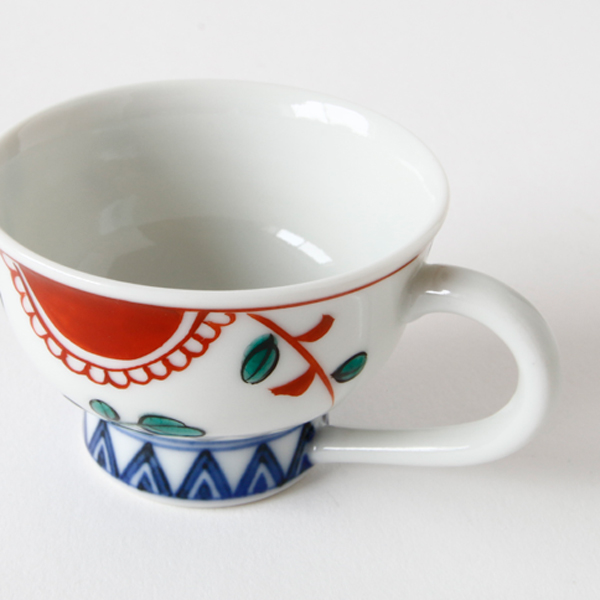
Porcelain sake vessels have thin, smooth rims that make for a pleasant mouthfeel, and
they're recommended for both chilled and warmed sake.
The Handled Sake Cup series comes in a very small size, and with its handle
attached, it gives an adorable impression, making it a nice gift for women, too.
Kamide Choemongama is a Kutani ware kiln with a history of
over 135 years, a long-established workshop that handles everything from shaping the porcelain to painting the designs.
Their handmade, hand-painted products feature vividly colored
overglaze decoration and deeply colored underglaze painting, and above all, their durable and beautiful clay body is what makes them so appealing.
Choosing by Rim Diameter (Shape)

Like Nousaku's "Futae,"
vessels whose rims narrow toward the top
trap and intensify the aroma.

Conversely, like the "Edo Kiriko Layered Yarai Pattern Mini Old-Fashioned Pair,"
vessels whose rims open wide toward the top
have a larger surface area when poured, which promotes oxidation,
and it's said that the release of aromatic compounds enriches the fragrance of the sake
while blowing off the alcohol smell.
It's not a matter of one being better than the other;
the shape you choose depends on how you want to enjoy the aroma.
Pairing with a Tokkuri Makes It Even More Delicious
When a tokkuri (sake flask) and ochoko (sake cup) come as a matched set, both the atmosphere and the flavor are all the better.
Rather than pouring sake directly from the bottle into an ochoko or guinomi,
let's enjoy it after pouring it into a tokkuri or katakuchi (spouted pouring vessel) first.


At Kamide Choemongama, there are
two sets where the tokkuri and ochoko designs match.
It's a rare design where both the tokkuri and the ochoko have handles,
giving it a truly charming impression.
Having a handle makes it easy to hold even when filled with warmed sake, and it also proves
its worth functionally.

If you want something simple and easy to use, Hakusan Toki is the way to go.
It's a plain white Hasami ware with no pattern, yet the tokkuri has a playful form,
almost as if a penguin were standing there.
The plump, rounded belly makes it easy to hold,
and the beak-like spout makes it easy to pour sake.
Hakusan Toki doesn't aim for flashy beauty, nor is it ordinary either;
it values designs "that never grow tiresome to use," and cherishes an approach that responds to
the "attachment" that grows from using it.

This is a set of a Tsugaru Vidro katakuchi with two matching ochoko.
The twisted katakuchi has a beautiful form, almost like a flower vase.
Since it's narrower at the bottom, it's easy to hold and pour—a convenient point.
The matching ochoko may look simple, but their design, with just the right amount of unevenness,
gives off a presence unlike anything else.
Since it's heat-resistant, it can be used with boiling water or in the microwave, and even though it's glass,
you can enjoy warmed sake with it too, making it an indispensable piece for serving drinks.

This time, we've introduced some points to keep in mind when choosing sake vessels.
According to experts and sake enthusiasts, the size and material of a sake vessel really does
change the flavor, so they encouraged people to find something that suits
their own preferred way of drinking and pace.
Sake enjoyed together with the people and things you love is sure to be something special.

GUIDE »
CATEGORIES »
- + Gifts by recipient
- + Gifts by scene
- + Clothing
- + Bags / Backpacks
- + Wallets / Card cases
- + Jewelry
- + Shoes
- + Rainy day outfits
- + Kitchen
- + Home
- + Babies / Kids
- + Japanese products
Earn Miles


Payment & Security