.webp)


.webp)


.webp)


.webp)


- トップページ/
- ZUTTO Journal/
- お手入れ・エイジング/
- White Items We'd ...
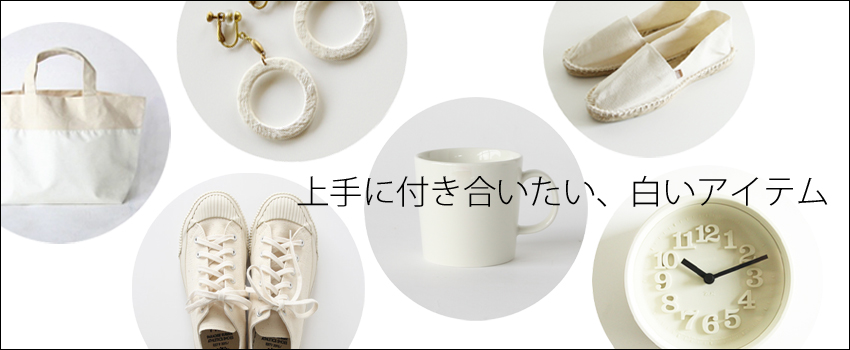
White Items You'll Want to Get Along With
A white shirt, white canvas sneakers.
Before you know it, even your mug is white too.
When you go looking for something simple,
somehow white things end up multiplying all around you.
Have you ever had that experience?
And yet, getting along with white items turns out to be surprisingly tricky.
"The ultimate in simplicity" sounds stylish enough,
but colorless white items tend to show every stain the moment you let your guard down,
and it's easy to end up spoiling their texture and feel.
Still, white things really are wonderful, aren't they?
This time, we've gathered white items together
and put together a guide to their appeal, along with tips for getting along with them well.

First, there's the classic white shirt or cut-and-sew top.
Determined not to miss the precious season when you can get by in just a single shirt,
you pull it out of the closet, and just as you're about to put it on,
you often notice stains and yellowing standing out around the collar.
And when a sauce stain or lipstick mark shows up
on your prized white clothing, it's quite a shock, isn't it?
For garments you can hand-wash at home, why not try removing the stain yourself?
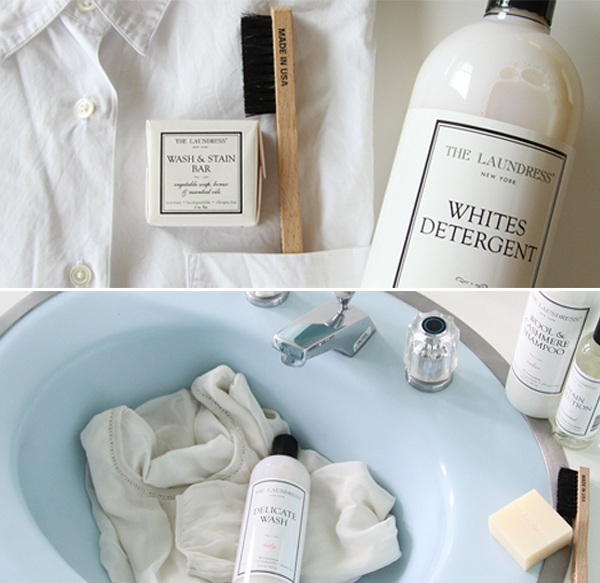
For clothing care, we recommend THE LAUNDRESS.
◇Caring for a Stain When You Notice One
1: Apply "Stain Solution" (ideal for food stains) or "Wash & Stain Bar" (ideal for sebum and oil stains) directly to the stained area.
2: Pour water over the stain and let it soak for about an hour. For sturdy fabrics such as cotton-linen blends, pouring hot water is best.
3: If the stain has faded but hasn't disappeared completely, repeat the same process.
4: Once you've treated the stain, wash the garment with a detergent suited to its material and color.
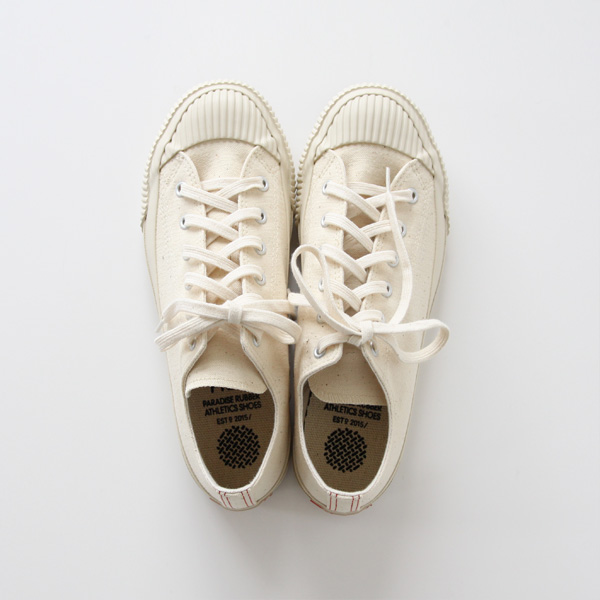
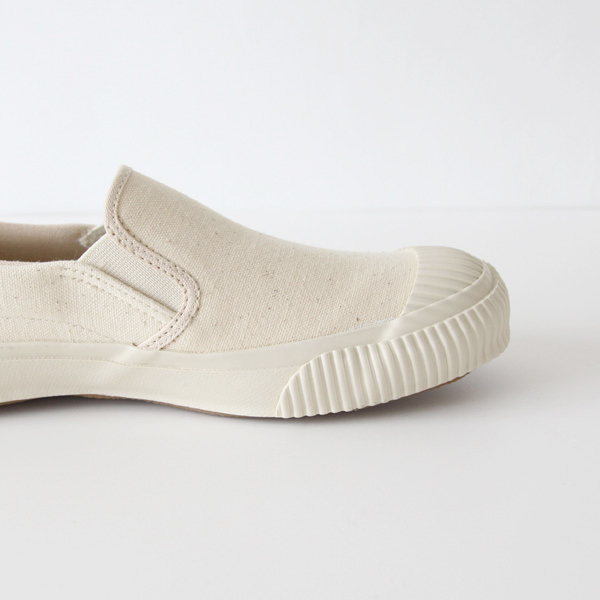
And then there are white canvas sneakers.
When you see someone pairing blue jeans with canvas sneakers,
wearing them with such fresh, effortless style, you can't help but be drawn in.
You'd want to keep them pure white and pristine no matter when you look at them,
but that turns out to be quite difficult. It's true that white shows dirt more readily,
but there are some tricks for keeping them as close to their original state as possible:
① Use a waterproofing spray on the canvas fabric portion
② Wipe off any dirt on the rubber parts, such as the toe, frequently
③ Don't wear them on rainy days!
Waterproofing spray not only guards against rain
but can also be expected to help prevent dirt from sticking.
Also, gently rubbing dirt on the rubber parts with an eraser works well too.
And no matter how careful you are about waterproofing,
fabric sneakers are still vulnerable to rain.
Look forward to sunny days, and let them rest at home when it rains.

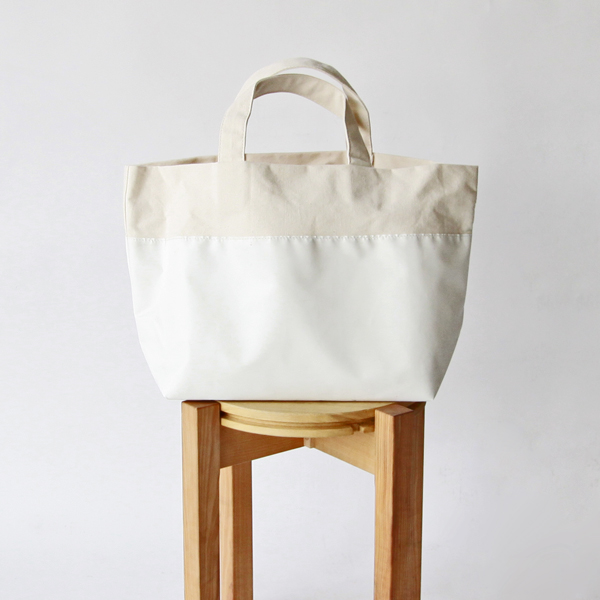
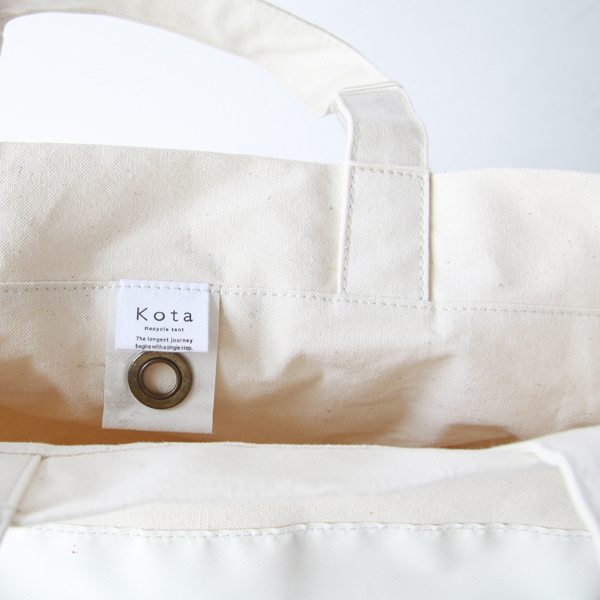
Fire-resistant sheets used in construction, once they've developed holes or torn.
Reusing those flame-retardant sheets and carefully sewing them together with linen canvas,
they're given new life as a sturdy, easy-to-use daily bag —
this is the kota tote in white.
With its smooth texture and appearance,
it's a white tote bag that's simple yet has a distinctive character all its own.
During manufacturing, each piece of fabric is carefully washed,
resulting in a finish so clean you'd never guess it was once a tent.
Since it's wax-treated, you don't need to worry even if it rains.
Washing does cause the paraffin to crack over time,
but you can enjoy that too as a sign of character that comes with use.
That said, there are some stains that simply won't come out.
If the flame-retardant sheet portion gets dirty, wiping it with a wet towel or thinner will clean it up nicely.
It's also fine to apply detergent and scrub with a sponge, so feel free to care for it without hesitation.
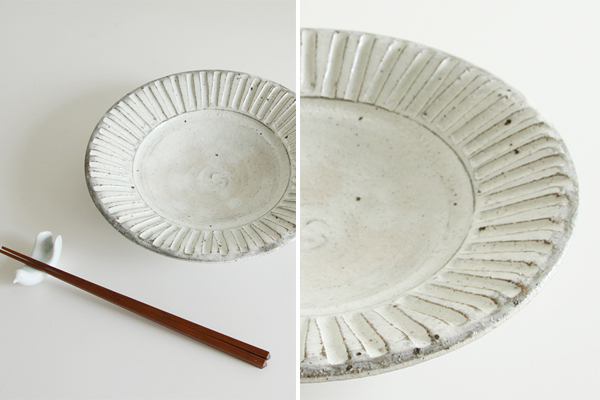
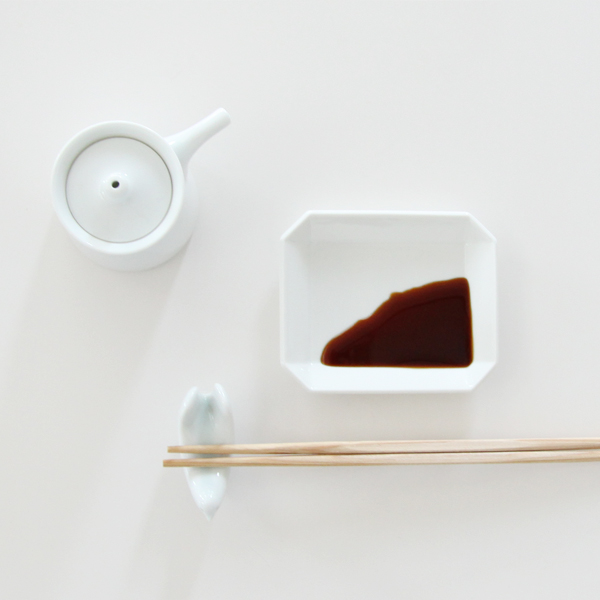
And then there's white tableware, too.
Many of you have probably had the experience of looking in your cupboard
and realizing it's filled with white plates, haven't you?
Even white tableware that looks the same can actually differ subtly
in color, texture, and character depending on the materials and methods used to make it.
What's generally referred to as "pottery" is called "toji" (ceramics) in Japanese.
Ceramics are broadly divided into "toki" (earthenware) and "jiki" (porcelain).
"Toji" is simply the umbrella term covering both earthenware and porcelain.
◇Toki (Earthenware):
Made mainly from clay known as toji clay — in other words, soil —
it's also sometimes called "tsuchimono" (earthy ware).
◇Jiki (Porcelain): Made mainly from a stone called toseki.
As opposed to "tsuchimono," it's sometimes called "ishimono" (stone ware).
Earthenware, made from clay, is naturally water-absorbent and porous,
so water would normally seep through it, but pieces glazed and fired
usually become watertight.
However, be careful, as soaking it in detergent for a long time
or washing it with boiling water can cause it to deteriorate.
Porcelain, on the other hand, is almost entirely watertight,
and is characterized by its hard firing, dense quality, and few pores.
Porcelain tends to be quite hard, but it's still breakable glassware after all,
so handle it with the same care you would earthenware.
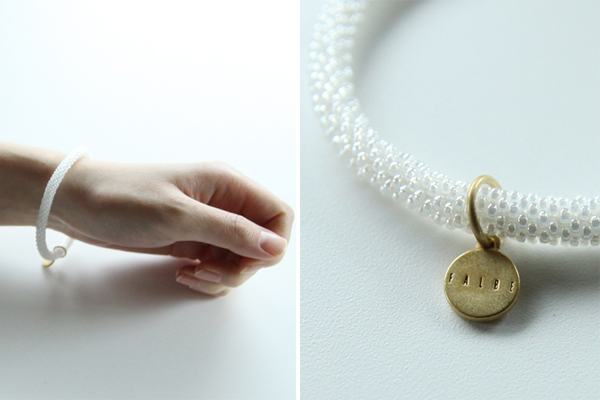
Having a white accessory on hand
gives your look a clean, light impression, doesn't it?
For example, the crochet bracelet by FALBE
uses tiny glass beads called "seed beads," about 1.5mm in diameter,
that let light pass through and shimmer like tiny seeds,
reflecting light for an elegant impression.
True to its name "Shine White," each individual bead
sparkles delicately, reflecting light and adorning your wrist.
Even among the wide variety of colored beads, with just a slight adjustment the color and
The cutting surface can show unevenness and variation, which requires years of skilled craftsmanship to master.
The beads, carefully blended and colored with dyes by experienced artisans,
look like small jewels that beautifully express delicate patterns.
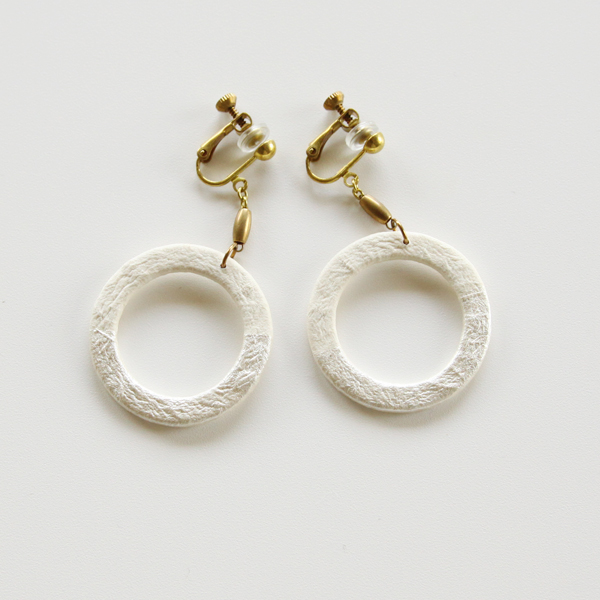
The material used for these accessories is washi (Japanese paper). You'll be surprised at how light it feels once you put it on.
This wonderfully light, swaying feel is something only washi as a material could achieve.
You may want to wear a bold, statement-making earring,
but glass or stone materials inevitably feel heavy once worn.
With accessories made from lightweight washi, however, that concern seems to disappear.
Accessories made from hand-crafted Kyoto washi are not only light and easy to wear,
but are also coated on the surface, giving them a resistance to water as well.
These earrings, with their pearl-like, glamorous impression, are perfect for everyday wear,
and are also recommended for party styling.
Try incorporating the vivid coloring unique to washi as an accent to your outfit.
The brands featured this time are as follows
◇Laundry care from THE LAUNDRESS
GUIDE »
CATEGORIES »
- + Gifts by recipient
- + Gifts by scene
- + Clothing
- + Bags / Backpacks
- + Wallets / Card cases
- + Jewelry
- + Shoes
- + Rainy day outfits
- + Kitchen
- + Home
- + Babies / Kids
- + Japanese products
Earn Miles


Payment & Security